

Few cities wear their design heritage as openly as Lisbon. It is in the buildings themselves: the tiled façades, the wrought-iron balconies, the Pombaline grid that rose from the rubble of the 1755 earthquake. String together Chiado, Bairro Alto and Príncipe Real and you have one of Europe's richest patches for anyone who travels for interiors. I went for 48 hours with a notebook and an empty suitcase, and came home with both full. Here is how to do it properly.
Where to Stay: Palácio Ludovice Wine Experience Hotel
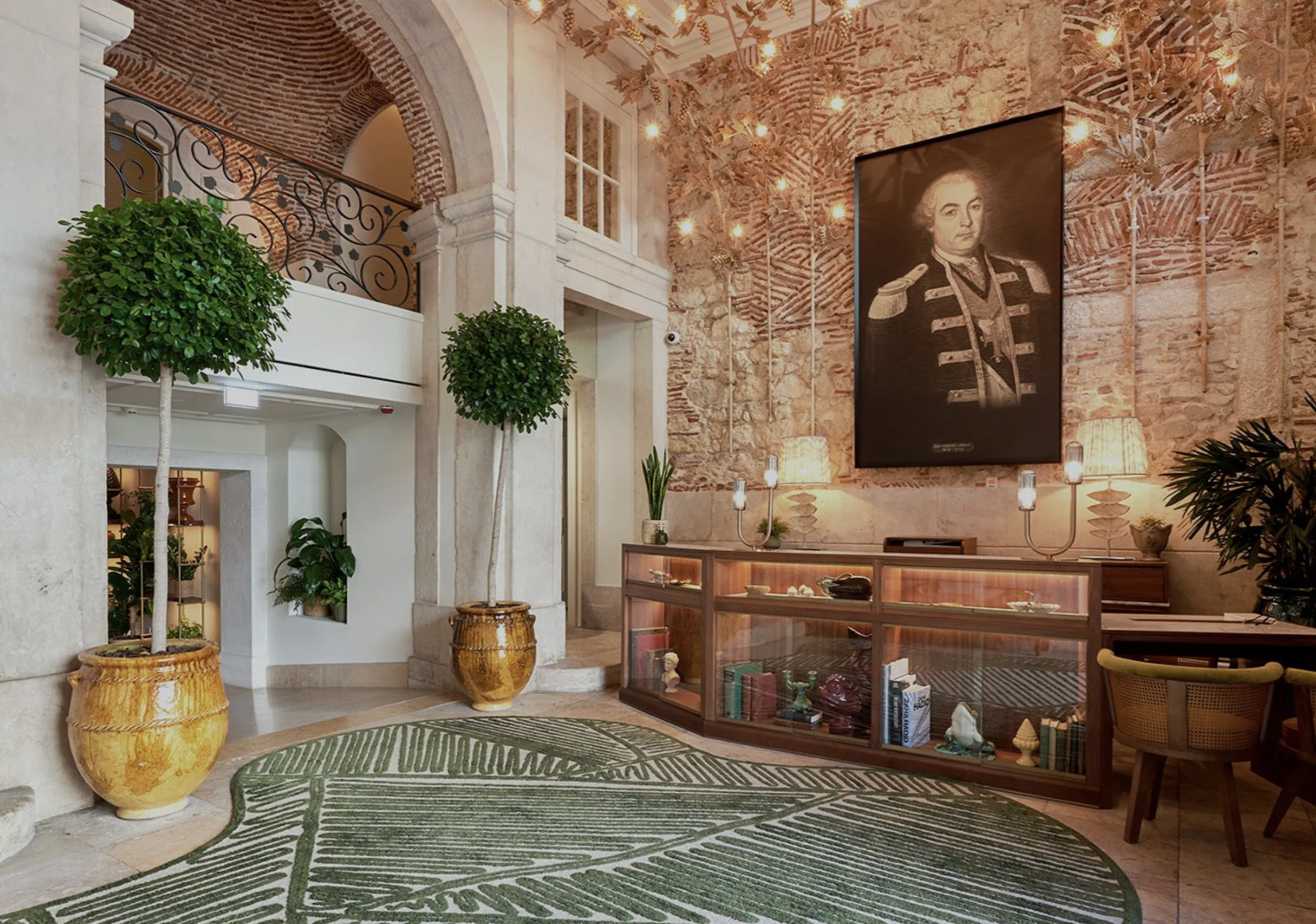
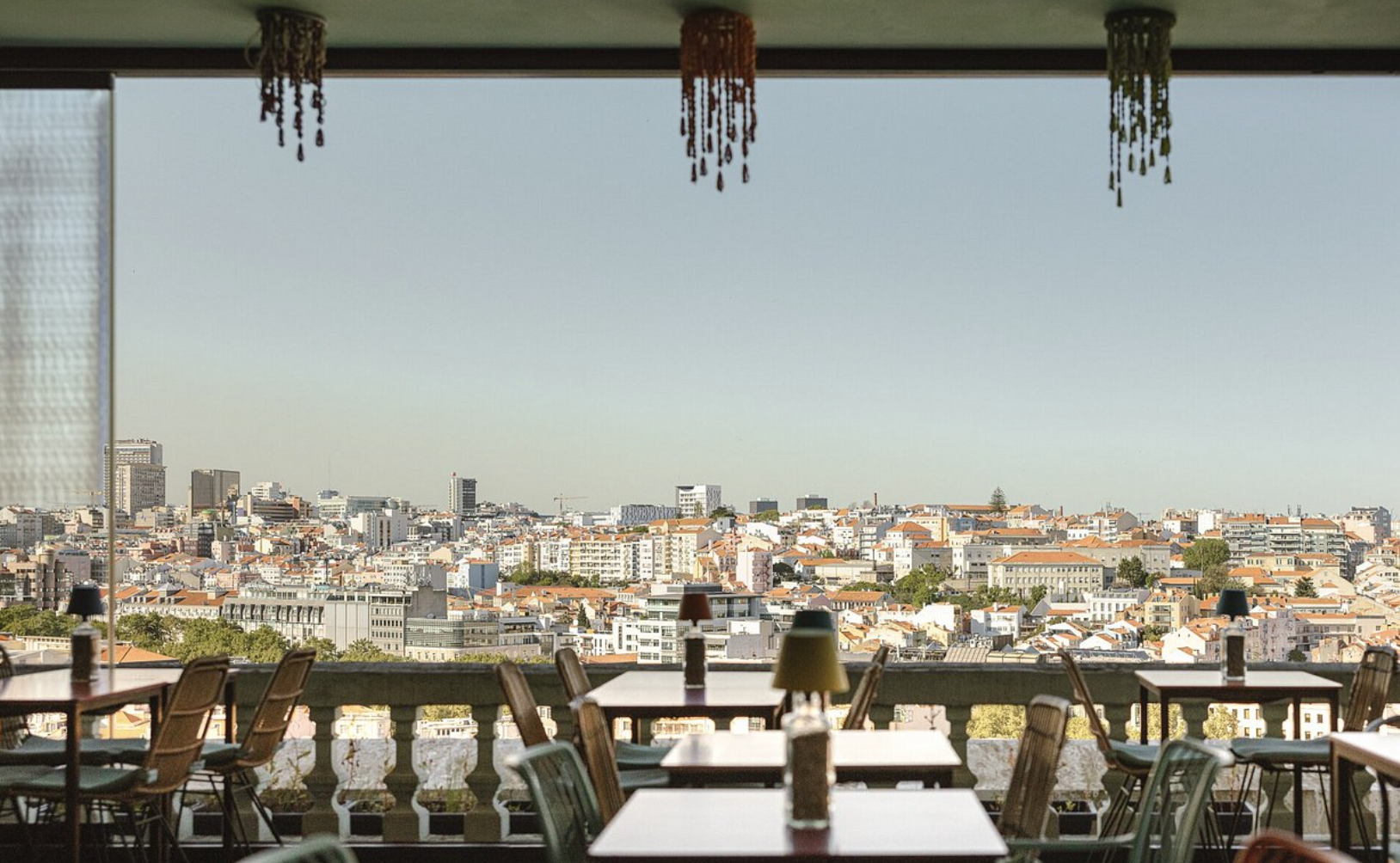
Palácio Ludovice is located at the top of Bairro Alto on Rua de São Pedro de Alcântara, its grand front door practically opening onto the São Pedro de Alcântara viewpoint, where half of Lisbon spills out below you towards the castle.After putting down my bags, I walked ten steps and stood at the railing, looking out at the entire city before me in the evening light - a pretty convincing way to start a trip.
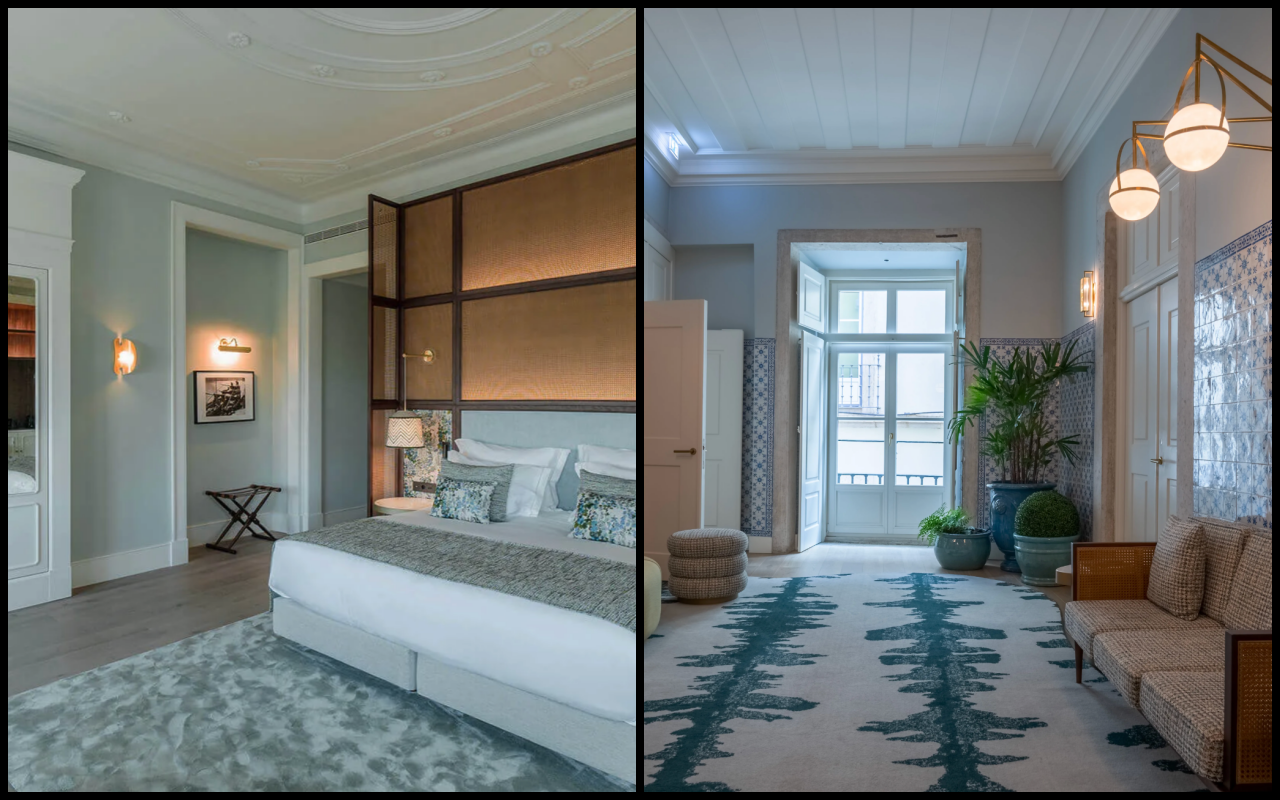
The building is more than 300 years old, first designed in the early 1700s as the home of João Frederico Ludovice, architect to King João V, and one of the few to survive the 1755 earthquake intact, thanks to an early anti-seismic technique later used to rebuild the whole city. Its most recent restoration was led by Miguel Câncio Martins, the architect behind Paris's Buddha-Bar and Quinta da Comporta, and his hand shows in the way old and new are held in balance rather than set against each other. A soft, chalky blue runs through the palette, calm against all that history.
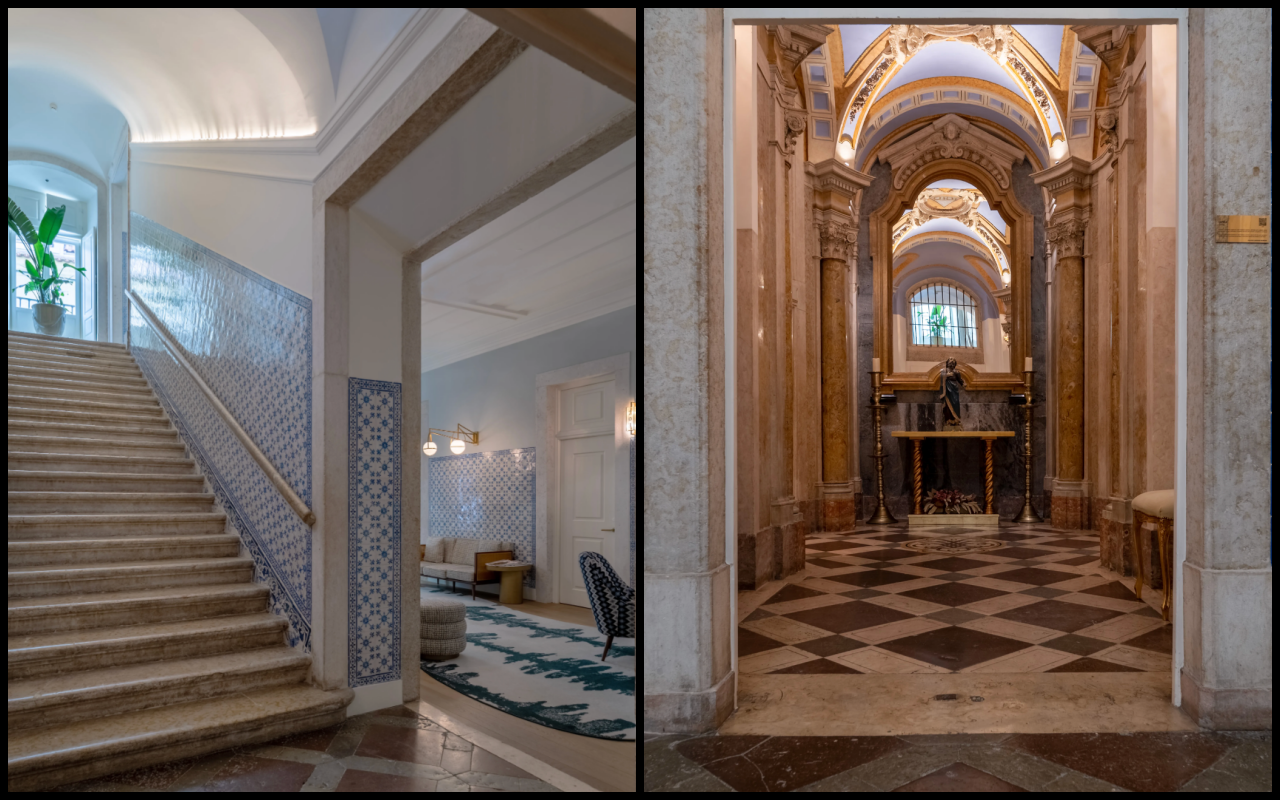
That history is in the fabric of the place, and I kept stopping to look at things: original 18th-century hand-painted azulejos climbing the walls, stucco and carved-wood ceilings, the odd fresco, a grand staircase. The detailing is obsessive in the best way. The mouldings are so carefully worked that the smoke detector in my room had been folded into the plaster like part of the design, and the corridor carpets, I was told, are patterned to echo the terraced vineyards of the Douro. My room had wooden floors, a super-luxe marble bathroom, one of the comfirst beds I have ever slept in, and windows looking out to a genuinely breathtaking view of the city stretched in front. Beautiful in every light.
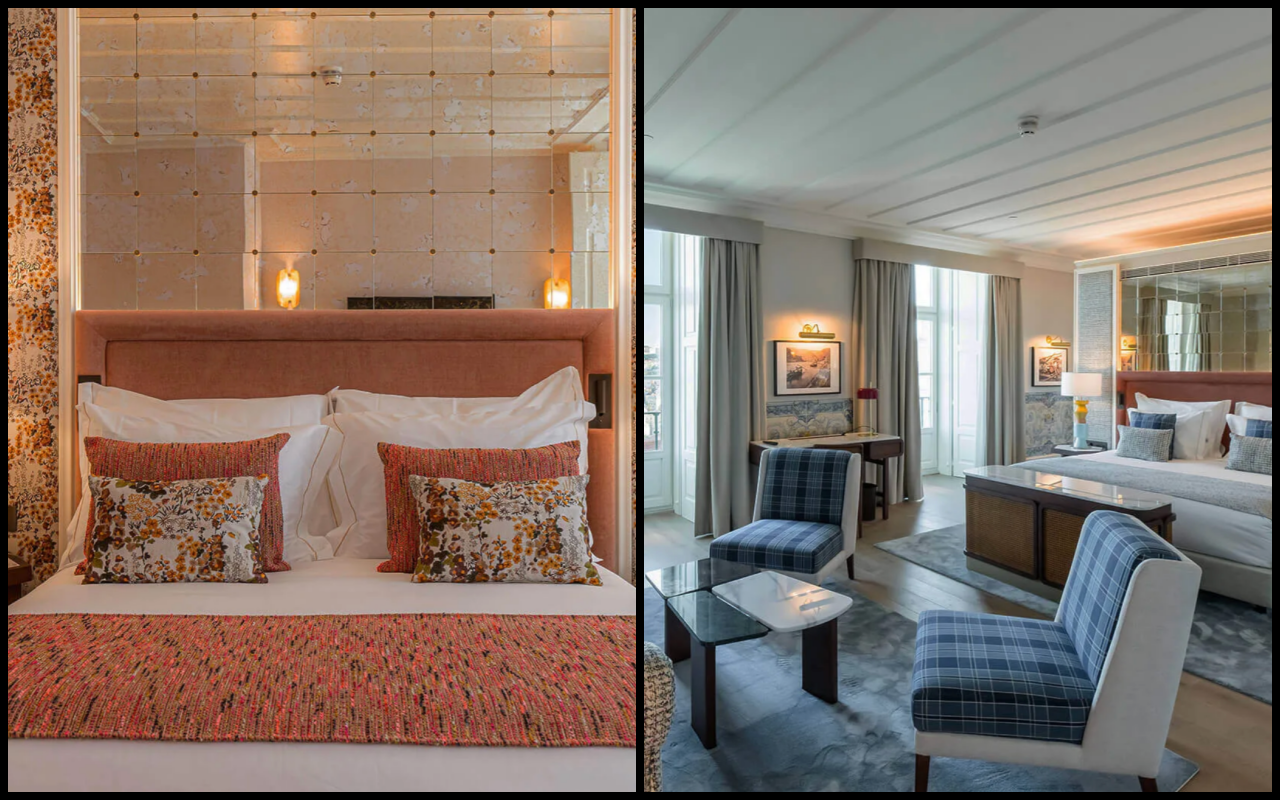
The wine theme, which sounds like a gimmick, turns out to run right through the place: a bespoke house scent, wine-based bath amenities I fully intended to steal, marble bathrooms stocked with Caudalie, and Bordallo Pinheiro ceramics dotted through the suites.
Downstairs there is a Caudalie Boutique-Spa, the brand's first in Lisbon, where the treatments are built around the grapevine. The bar is a piece of design in itself, set beneath an old brick vault with a floor-to-ceiling counter running the length of the wine cellar, hand-drawn by Câncio Martins.
The best ritual is the daily tasting. At 5.30 each evening the hotel pours three Portuguese wines, one of them complimentary for guests, from a cellar of more than 100 references covering all 14 of the country's wine regions, and I made sure I was back for it both nights.
Dinner and breakfast is in Federico, set in a courtyard under a wall of green and a vaulted brick ceiling, where the cocktails are wine-based and named, with a straight face, after old songs. I ordered a Nothing Compares 2 wine.
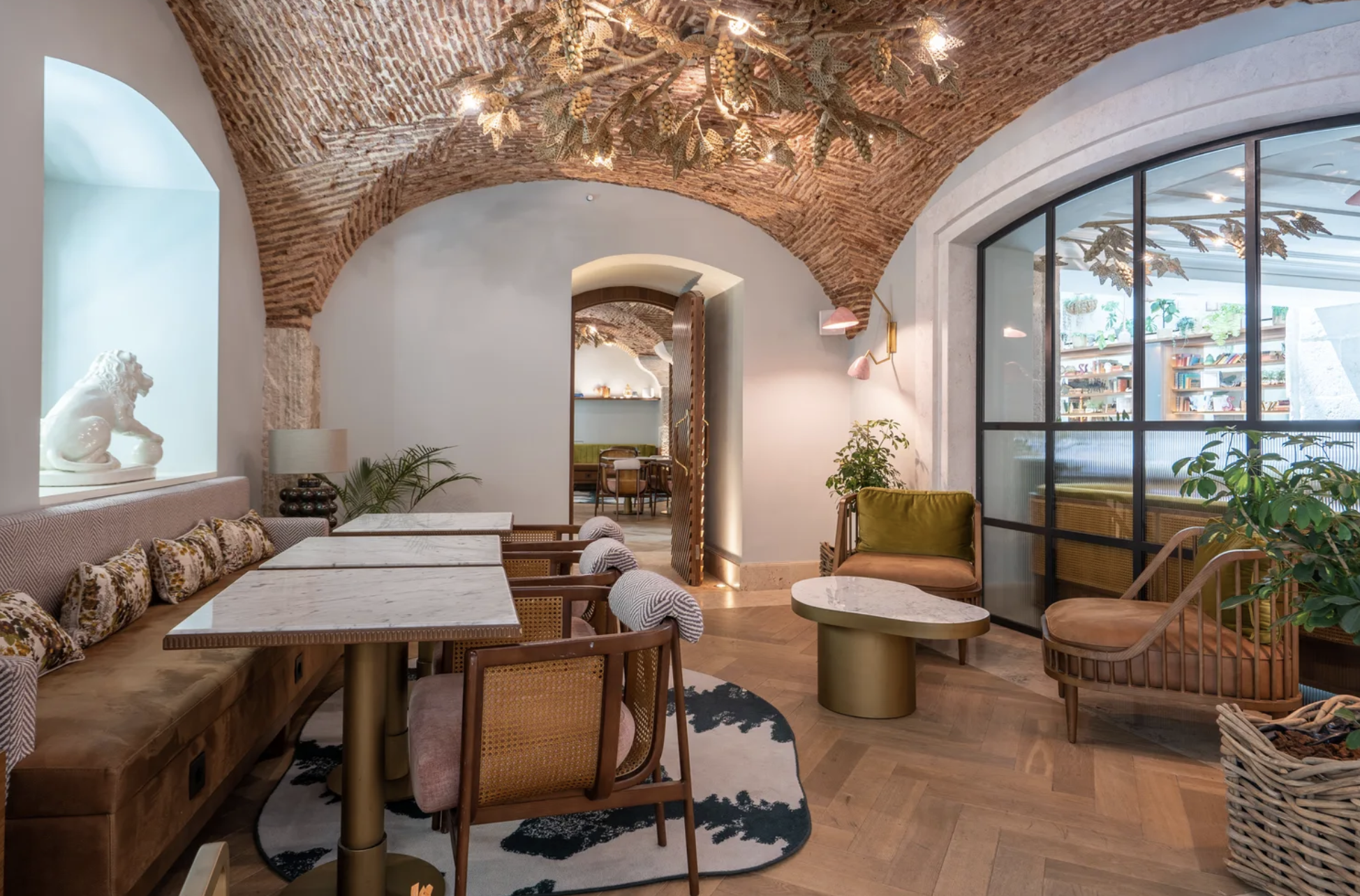
Palacioludovice.com from €510 per night. (Main feature image)
The Design Shops
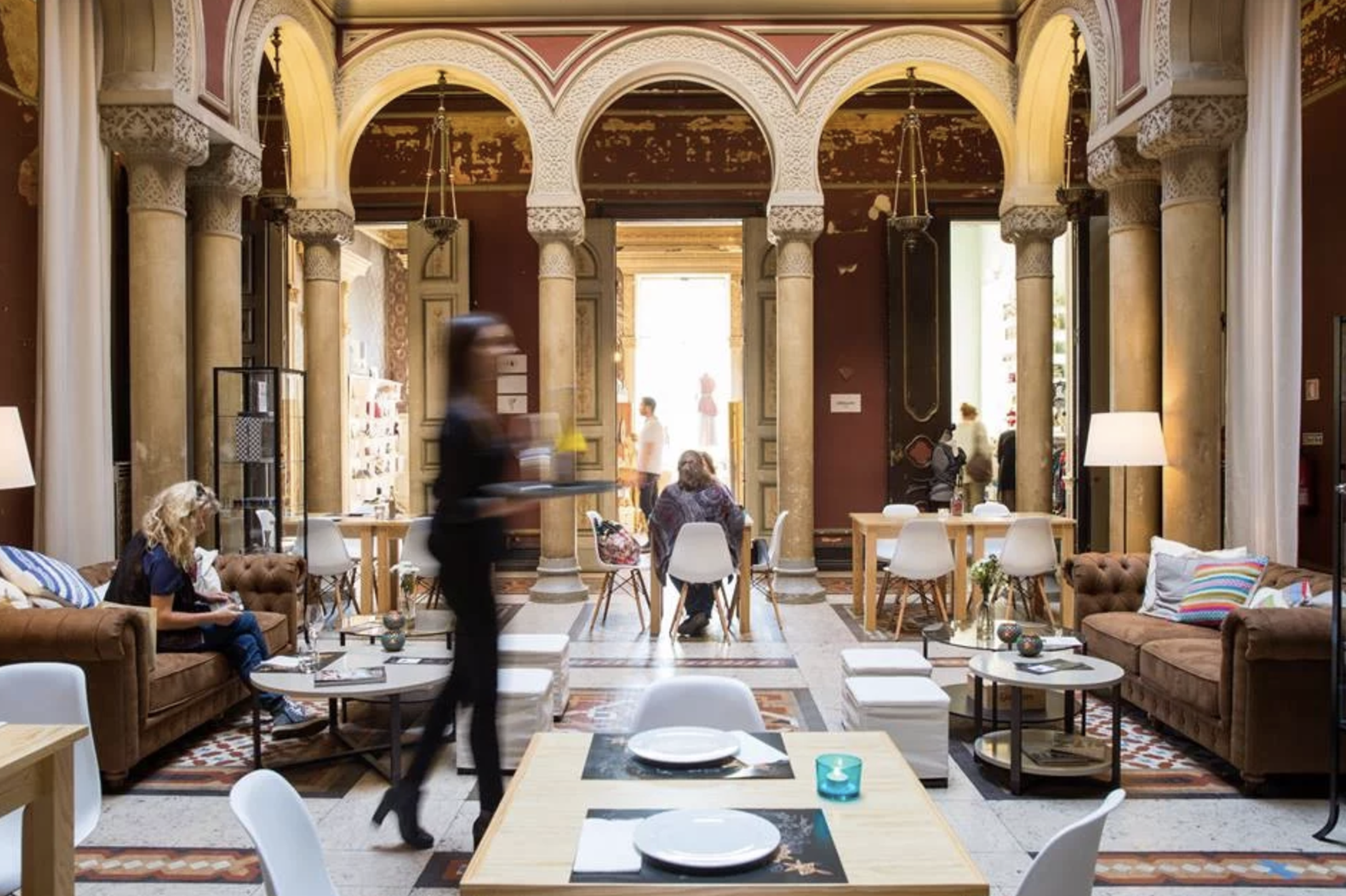
I started where everyone should, in Príncipe Real. Embaixada stopped me in the doorway before I had looked at a single price tag. It is a shopping gallery set inside the Palacete Ribeiro da Cunha, a 19th-century neo-Moorish palace, and each former reception room now holds a different Portuguese label, from ceramics and homeware to fashion and art. Entry is free, the horseshoe arches and painted ceilings are worth the trip on their own, and there is a gin bar in the courtyard for when your feet give out. embaixadalx.pt
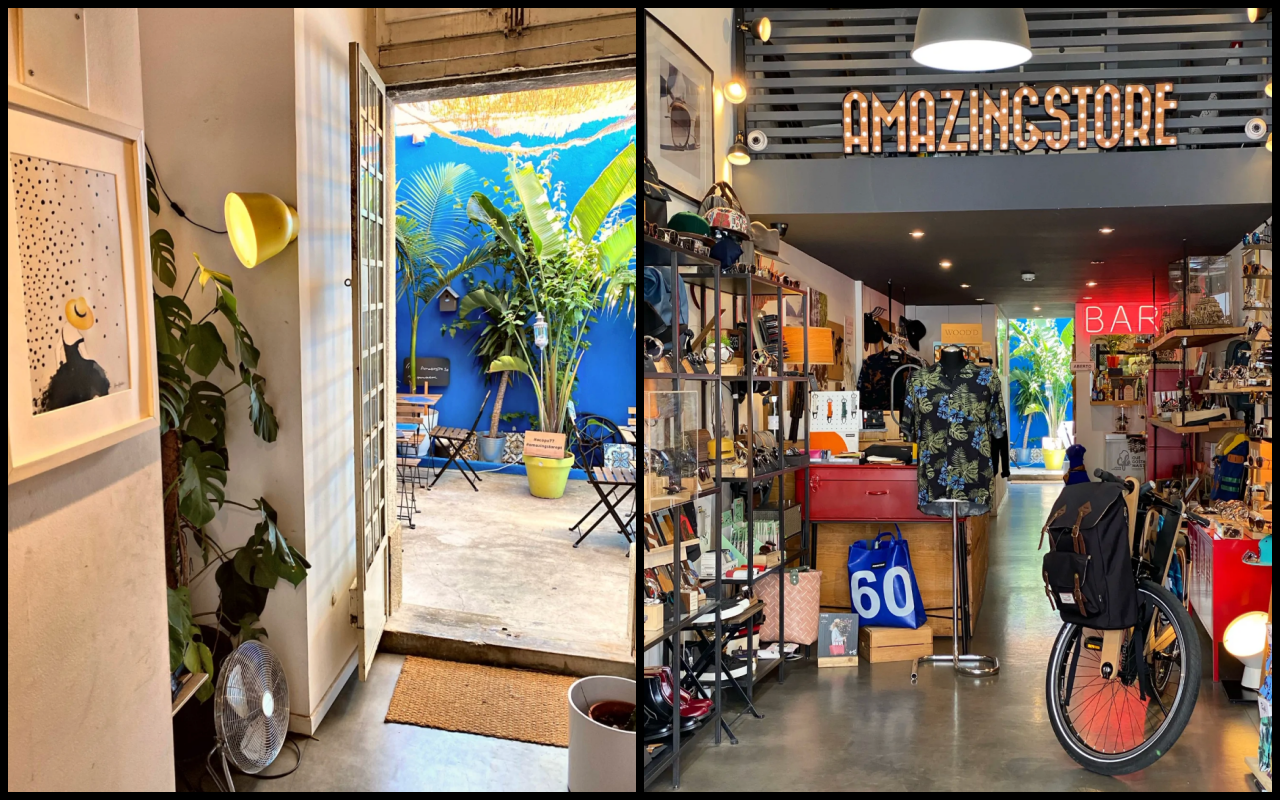
The streets around the garden are dense with concept stores. I lost time in Amazing Store, on Rua Dom Pedro V, 77, which edits fashion, jewellery, candles and homeware into one tightly curated space, and its own little courtyard cafe.
Loja Real is the playful one, spread across two Lisbon addresses, with a pop-up spirit and a good eye for Portuguese design. loja-real.com
A few steps on, Casa Pau-Brasil is impossible to miss, a riot of colour and greenery designed by Joana Astolfi, the artist behind Hermès's Lisbon windows, given over to Brazilian art, craft and design across two floors of the Palacete Castilho.
For something quieter, Kintu Studio, just downhill on Rua Poiais de São Bento, sits somewhere between a gallery and a shop, with fluted stoneware, hand-thrown ceramics and woven baskets by Portuguese makers displayed like exhibits. kintustudio.com
And for a very Portuguese buy, Cork & Co works cork into genuinely covetable objects, from bowls and lighting to the odd chair.
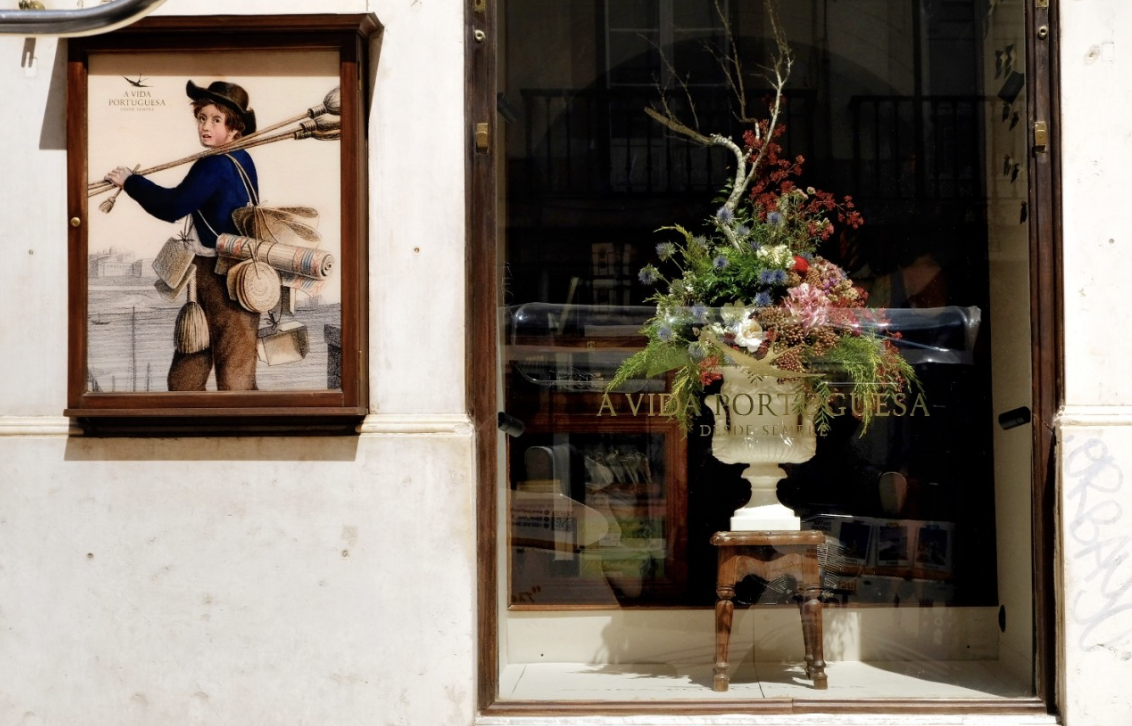
For heritage pieces, A Vida Portuguesa is the one I keep coming back to. Founded by journalist Catarina Portas, it stocks only Portuguese-made goods, hand-stitched linen, ceramics, enamelware and vintage soaps in packaging so lovely I bought things I did not need. The Chiado branch is a short walk downhill, though the Intendente flagship, set in a former tile factory, is bigger and more beautiful if you have time. avidaportuguesa.com
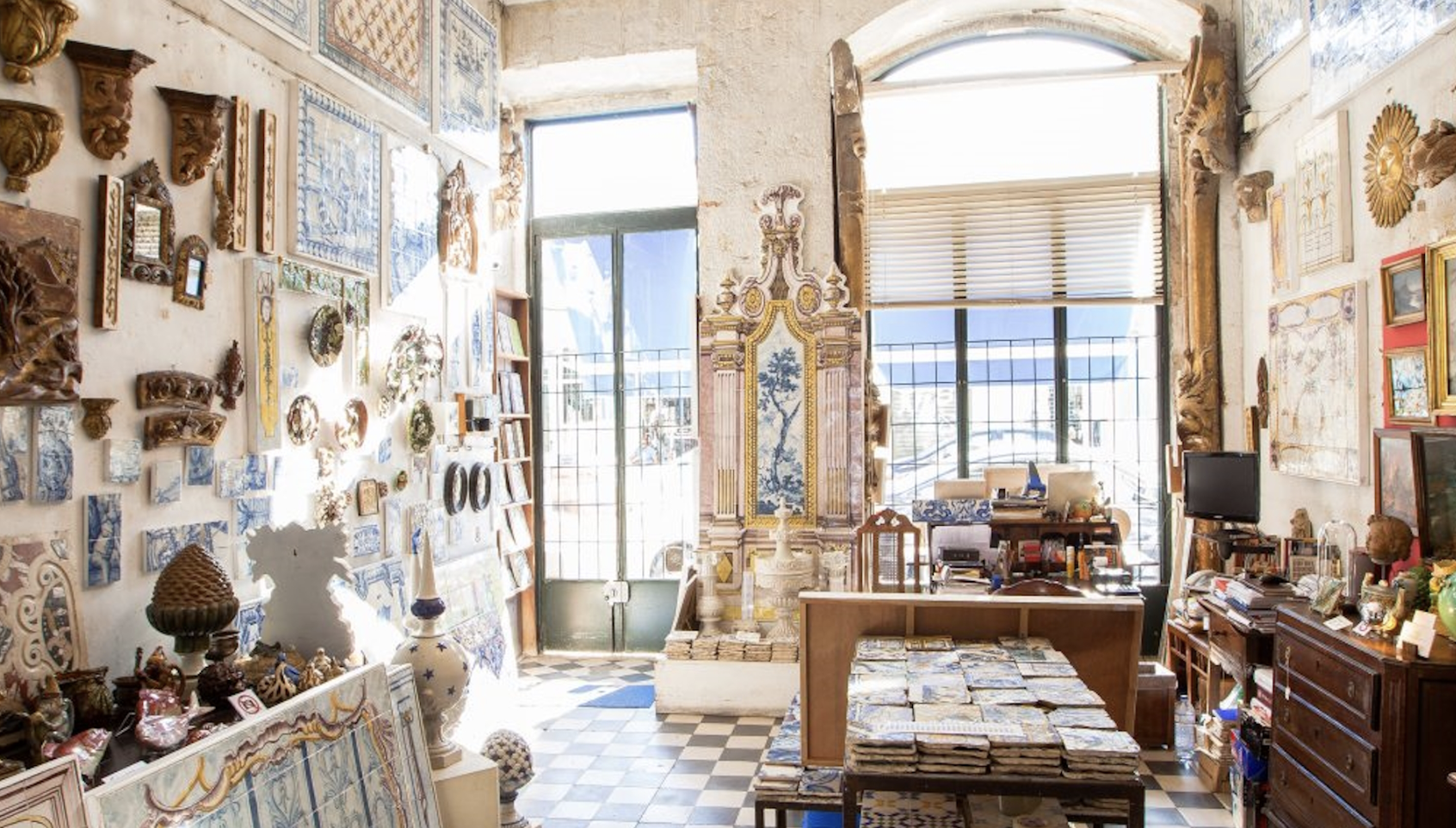
A few doors from the hotel on Rua Dom Pedro V, Solar is a treasure box of antique azulejos and salvage, run by the same family since 1957 and once named by the New York Times as one of Europe's twelve treasures. Designers come here to source a single perfect panel, and I very nearly bought a tile I had nowhere to put. solar.com.pt
A Word on Tiles
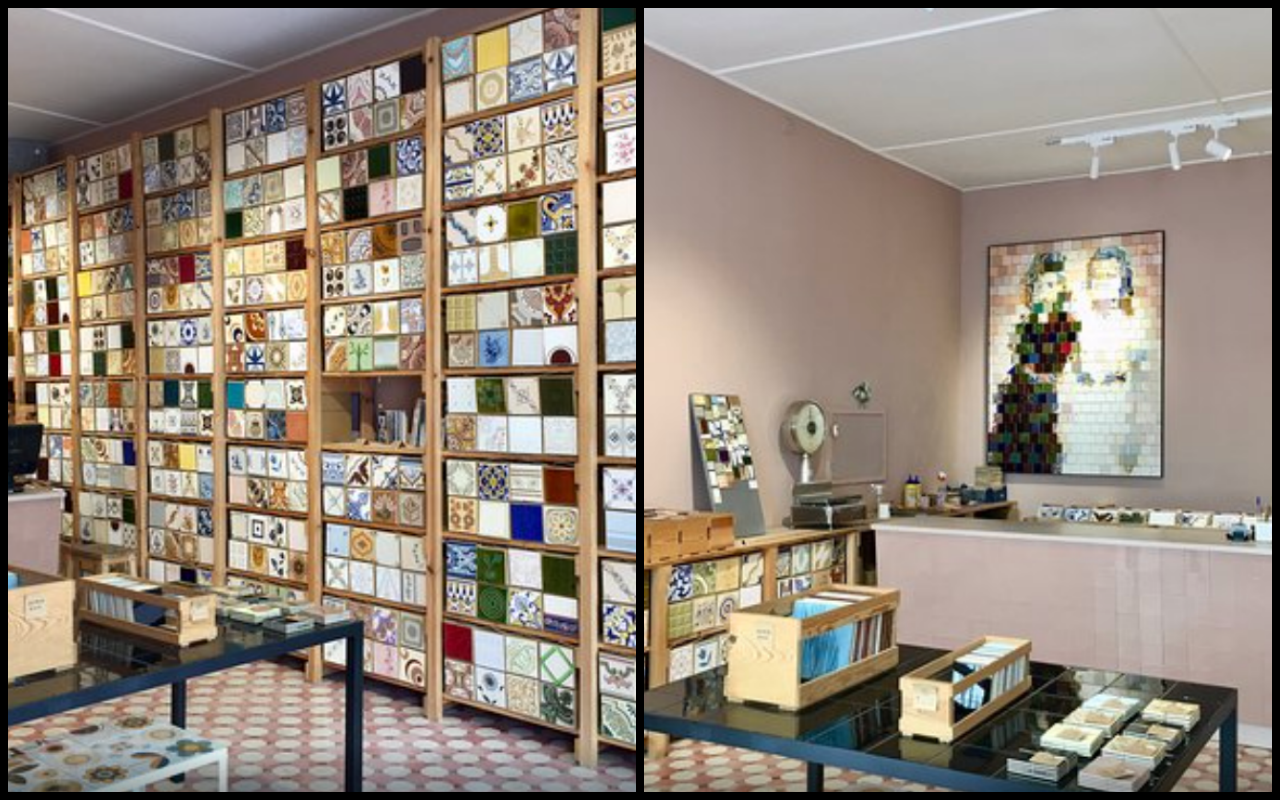
No interiors trip to Lisbon is complete without azulejos, but buy them well. Never take tiles from street sellers or flea stalls, as many are stripped illegally from old buildings. I went instead to Cortiço & Netos in Intendente, where the family sells reclaimed and discontinued 20th-century tiles laid out in long wooden drawers you flick through like records, and I could have stayed all afternoon. corticoenetos.com
For new work, Fábrica Sant'Anna on Rua do Alecrim in Chiado has been hand-painting tiles since 1741, each one still finished by hand. santanna.com.pt
And for tiles on a grand scale, Viúva Lamego, going since 1849 and behind many of the city's metro panels, bridges historic patterns and contemporary artist collaborations. viuvalamego.com
Design Hotspots
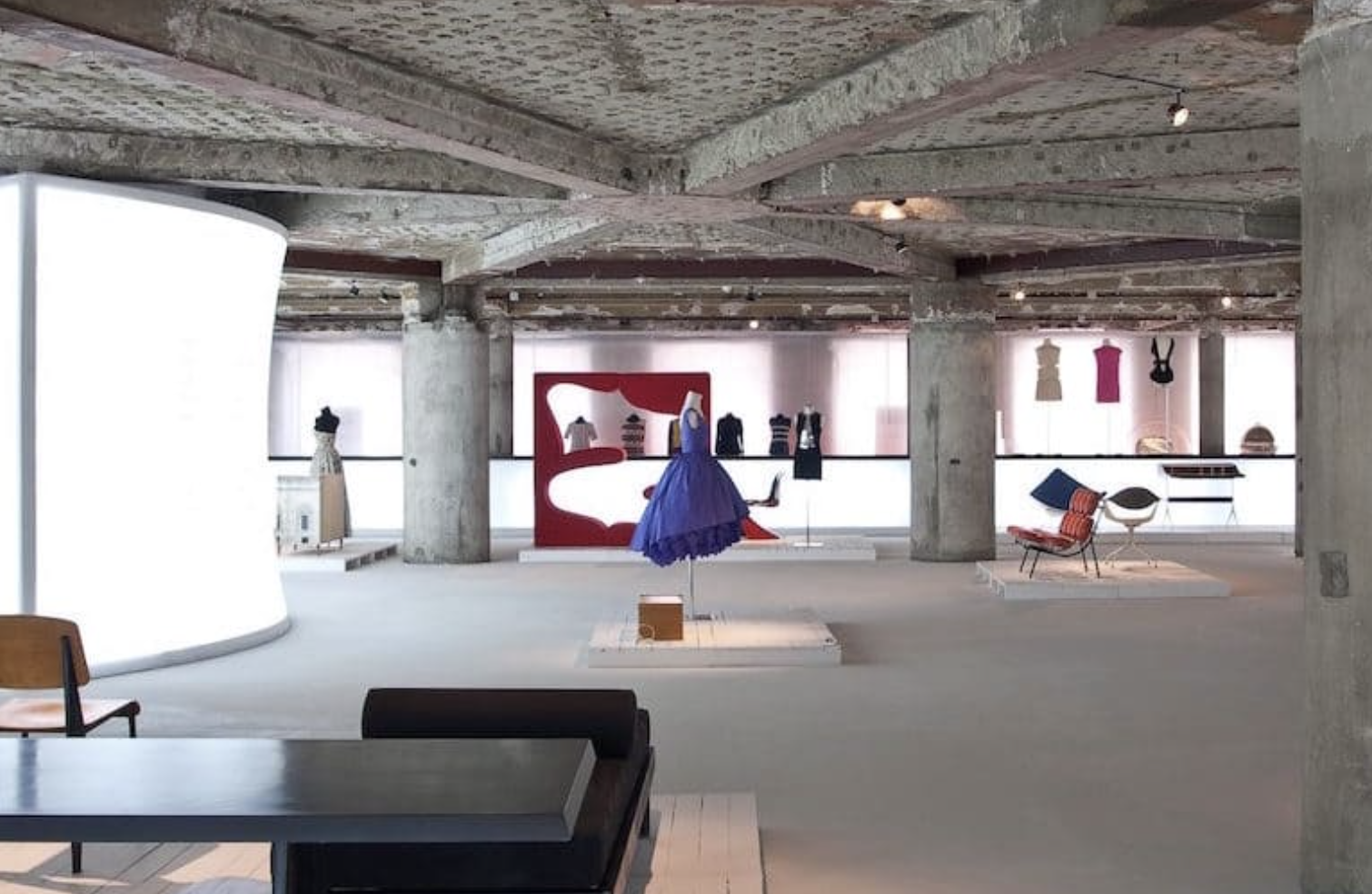
For design under one roof, MUDE, the Design and Fashion Museum on Rua Augusta, reopened in 2024 after eight years of restoration and is the best single stop for 20th-century design, spread across four open-plan floors of a former bank. mude.pt
The Museu Nacional do Azulejo, the great temple of Portuguese tile, is currently closed for its own restoration and is not expected to reopen until late 2026, so check ahead before you go. In the meantime the tiles are all around you, not least on the astonishing tiled façade of the old Viúva Lamego factory at Intendente.
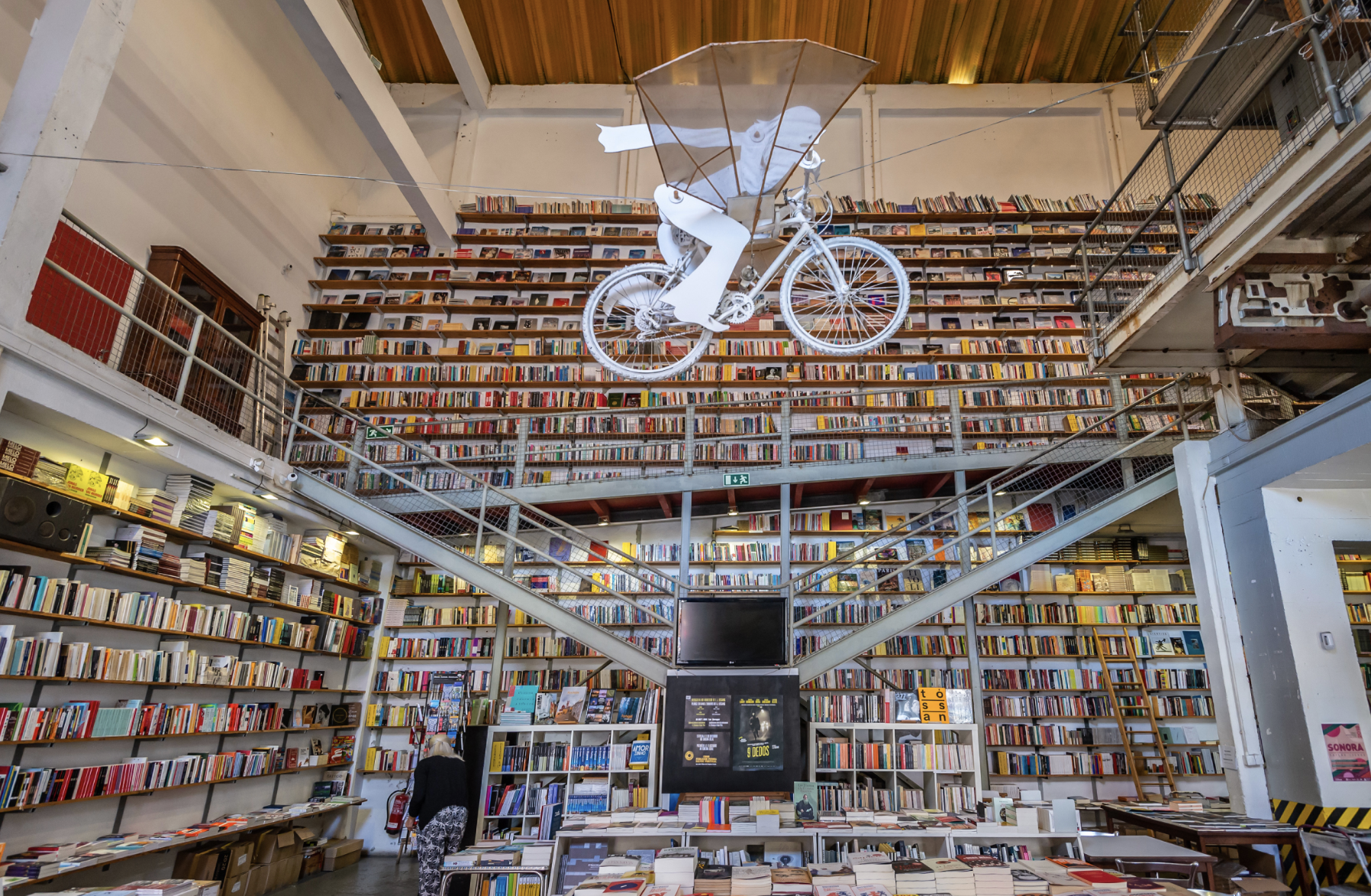
For a different pace, LX Factory in Alcântara is a former industrial complex now full of design studios, independent shops and the wonderful Ler Devagar bookshop, at its best for the Sunday market. lxfactory.com
And for a proper rummage, Feira da Ladra, the open-air flea market at Campo de Santa Clara, runs Tuesdays and Saturdays. Go early, go slowly, and check the underneath of everything.
Where to Eat: Lost In
A few doors from the hotel on Rua Dom Pedro V, and its terrace, shaded by a canopy of mismatched umbrellas and trailing greenery, looks clear across the rooftops to the river. The interior is all colour and collected-over-time charm, the menu leans Indian and Portuguese, and I would go back for the setting alone. lostinrestaurante.com
A Palace for Lunch: Casa do Alentejo
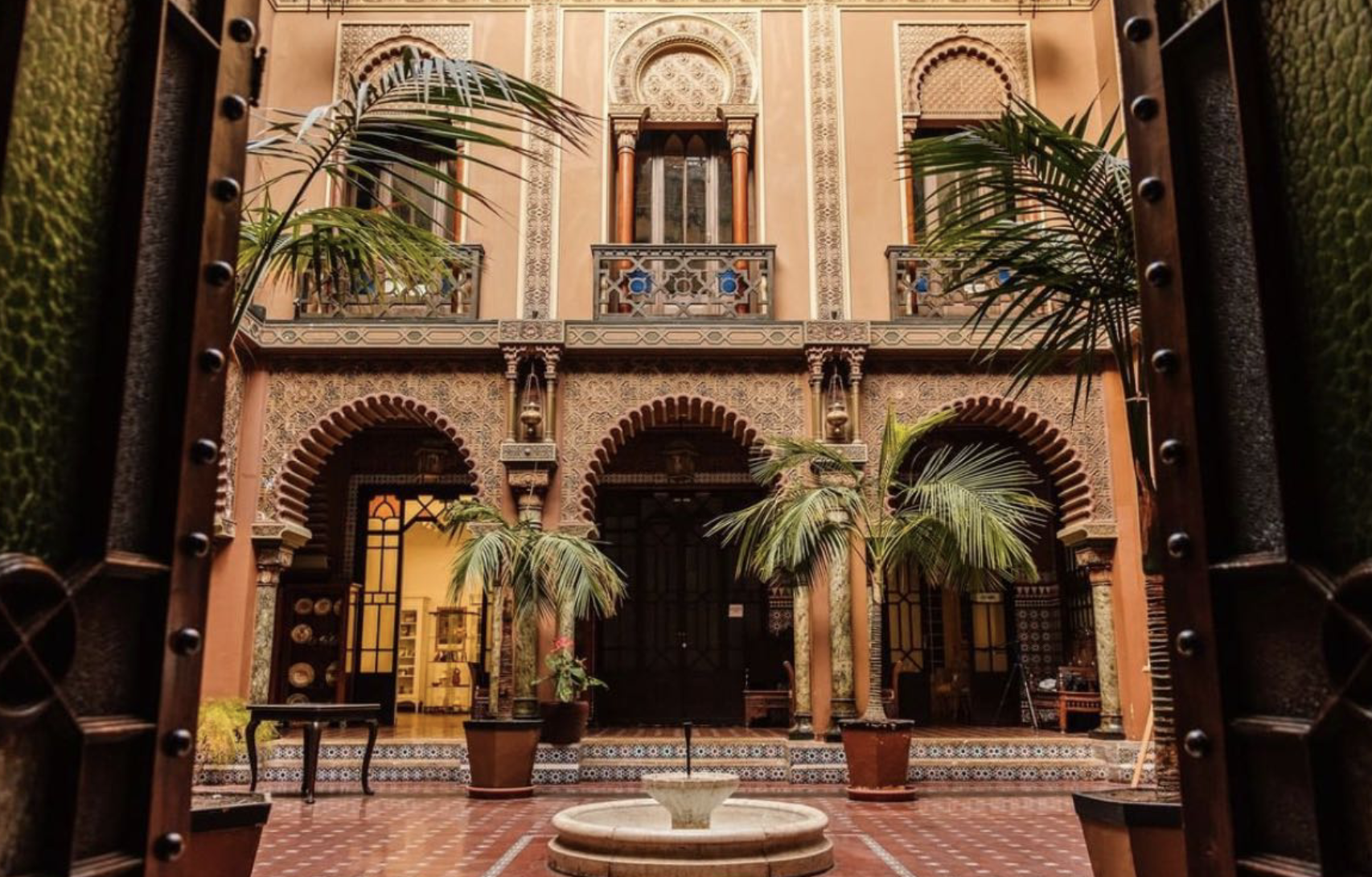
The one I would not miss hides behind a plain door on Rua das Portas de Santo Antão, near Rossio. From the street Casa do Alentejo gives nothing away, then you climb the stairs into a neo-Moorish courtyard, all horseshoe arches and blue-and-white tile, and your jaw drops. Upstairs is a former ballroom lined with mirrors, frescoed ceilings and gilded plasterwork, and dining rooms hung with azulejo panels and warmed by open fires. It began as a 17th-century palace and has been the cultural home of the Alentejo region since the 1920s. The food is honest and regional, pork with clams and good house wine, but you come first for the rooms. casadoalentejo.pt
One for the Evening: Dinner, Four Ways: Bairro do Avillez
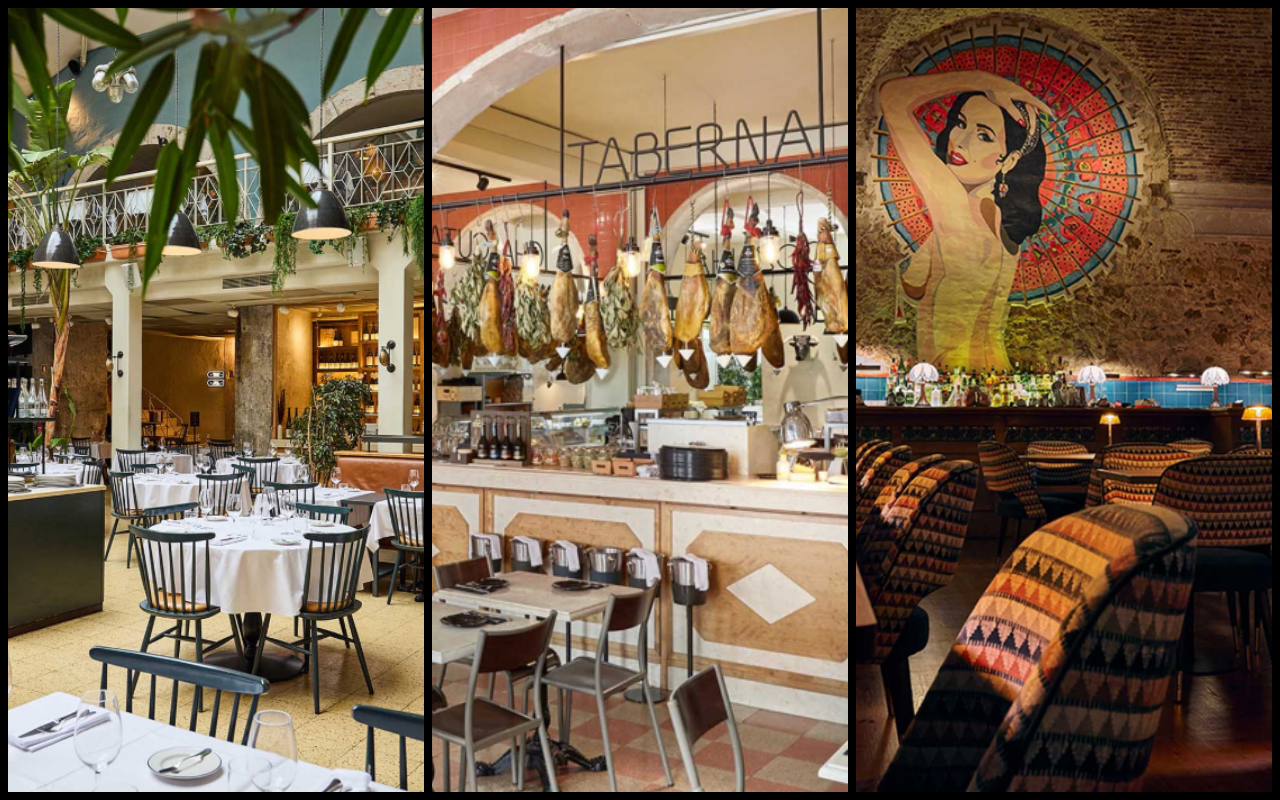
For dinner I went to Bairro do Avillez, the neighbourhood concept dreamed up by chef José Avillez on Rua Nova da Trindade, four restaurants and a deli folded into one historic Chiado building. Avillez is the most decorated chef in the country, with two Michelin stars at nearby Belcanto, and the whole place is styled like a little Lisbon quarter, with tiled walls painted with foodie scenes and artful installations at every turn.
The showpiece is the Páteo, a bright, plant-filled courtyard built around an open kitchen where the seafood is the thing. Around it sit the informal Taberna for petiscos, the Mini Bar for cocktails and live music, and Pizzaria Lisboa for family-style sharing. You could eat here four nights running and never repeat yourself. bairrodoavillez.pt
For more inspiring spaces around the world to inform your next decorating or renovating project, check out our Inspiring Space review in every issue and more online.
Pick up a copy of House and Home magazine on shelves or download a digital copy via our App or subscribe HERE


